If you’ve ever stopped to think about how the 5-gallon water bottles that fill office coolers or home water dispensers come to life, one component stands out as the unsung hero of the entire manufacturing process: the heating system in a gallons water bottle blow molding machine. As a blow molding machine supplier, I’ve spent thousands of hours walking clients through these systems—answering questions about why they work the way they do, what makes a heating system efficient, and how it directly impacts the quality and cost of the final water bottle. Too often, buyers focus on the machine’s capacity or price tag, ignoring the heating system, which is actually the heart of the process. Let me break down what these systems are, how they function, and why they matter for anyone looking to produce high-quality gallons water bottles.
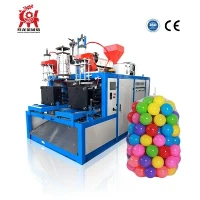
First, it’s important to ground this in what blow molding for large water bottles actually entails. Unlike small plastic items (like the ones made by our Semi Automatic Ocean Ball Blow Molding Machine, which handles smaller, simpler parts), gallons water bottles require consistent, uniform heating of preforms or parisons to avoid defects like uneven walls, bubbles, or soft spots. A gallons water bottle blow molding machine uses either extrusion blow molding (where a continuous tube of molten plastic, called a parison, is extruded then blown into a mold) or injection blow molding (where a pre-formed plastic piece is heated and then blown). For most large 5-gallon bottles, extrusion blow molding is the go-to method, and that’s where the heating system does most of its heavy lifting.
Let’s start with the core components of the heating system. The main parts are the heating elements, temperature control system, parison die (for extrusion blow molding), and insulation layers. Each works in tandem to ensure the plastic reaches exactly the right temperature, not too hot (which would cause it to sag or degrade) and not too cold (which would make it brittle and hard to shape). The heating elements themselves are typically high-wattage electric resistance heaters, though some older systems use gas, but modern machines lean electric for better precision and lower long-term costs. These elements are wrapped around the parison die and the barrel of the extruder, where plastic resin (almost always HDPE, or high-density polyethylene, for water bottles) is melted and shaped.
Wait, let’s clarify the difference between extrusion and injection blow molding for gallons bottles, because that changes how the heating system is configured. If you’re using an injection blow molding machine, you start with a solid preform—think of a large test tube of plastic—that’s heated in a separate oven before being transferred to the blowing station. For this, the heating system is a dedicated preform oven, with multiple zones that heat the preform evenly so that when it’s blown, it expands consistently into the 5-gallon shape. For extrusion blow molding, the heating system is built into the extruder barrel and parison die. The extruder barrel has temperature zones that gradually heat the HDPE resin, melting it as it moves toward the die, which shapes it into the parison. This is critical for gallons bottles because the parison has to be the right length and thickness to blow into a bottle with uniform wall thickness—thicker at the base and neck, thinner but consistent on the sides, so it holds water without cracking or leaking.
One question I get all the time is: why can’t a heating system for a gallons water bottle machine just be a scaled-up version of one for smaller plastic products, like our Milk Bottles Blow Molding Machine? The answer is simple: scale brings new challenges. A 5-gallon water bottle is much larger than a milk bottle, so the parison is longer. That means the heating system can’t just heat the entire parison the same way—if the top of the parison (which will become the bottle’s neck) is too hot, it will sag before it even reaches the mold, and if the bottom is too cold, it won’t expand properly, leading to a weak base. So gallons water bottle heating systems have multiple independent temperature zones, often 5 to 7, that let operators adjust heat levels along the length of the parison. This is called parison programming, and it’s a key feature that separates good heating systems from great ones.
Let’s talk about temperature precision, because that’s where efficiency and quality meet. HDPE for water bottles melts at around 190°C to 230°C (374°F to 446°F), but even a 5°C (9°F) fluctuation in one zone can ruin a batch. Too high, and the plastic will start to break down, creating streaks or weak points that make the bottle unsafe for drinking water (a huge compliance issue for manufacturers). Too low, and the plastic won’t flow smoothly through the die, leading to uneven thickness or gaps that cause leaks. Modern heating systems use PID (Proportional-Integral-Derivative) controllers, which automatically adjust power to the heating elements to maintain a steady temperature in each zone. No more manual temperature tweaks that lead to wasted plastic and rejected parts. These controllers also interface with the machine’s main PLC (Programmable Logic Controller), so operators can monitor all zones in real time from a single screen.
Energy efficiency is another big factor for buyers. Heating systems are one of the biggest energy hogs in blow molding machines—they can account for 40% to 60% of a machine’s total electricity use. That’s why more gallons water bottle blow molding machines now include features like insulated heating zones, which reduce heat loss to the surrounding air, and high-efficiency heating elements that produce more heat with less power. Some newer models even use infrared heating for preforms (in injection blow molding setups), which is more targeted and heats only the plastic, not the entire oven cavity. For manufacturers running these machines 24/7, that translates to lower utility bills over time, which is a huge selling point.
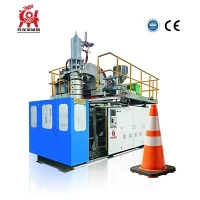
But heating systems don’t exist in a vacuum—they have to work with the rest of the blow molding machine. For example, the cooling system (another critical part of the process, though less talked about) is paired with the heating system. Once the parison is heated and blown into the mold, it needs to cool quickly to hold its shape. If the heating system didn’t heat the parison evenly, the cooling system will struggle, leading to longer cycle times and lower production rates. That’s why when I help a client select a gallons water bottle machine, I don’t just look at the heating system in isolation—I make sure it’s compatible with the rest of the machine’s components. For example, if a client is making 20L stackable jerrycans (similar in size to 5-gallon water bottles), I might recommend our 20L Stackable Jerrycan Blow Molding Machine, which has a specialized heating system calibrated for that specific container’s shape and pressure needs.
Another common point of confusion is between semi-automatic and fully automatic machines, and how their heating systems differ. For semi-automatic machines, like many small-scale manufacturers use when starting out, the heating system might have fewer zones, since the parison is loaded or the preform is moved manually. These machines are great for lower production volumes, but they’re not as precise as fully automatic systems for high-volume runs. Fully automatic gallons water bottle machines, like our 2+2 Automatic Electric Blow Molding Machine for Small HDPE Products—wait, no, that one’s for small parts, but our fully automatic large-volume machines work on the same principle: automated parison adjustment, real-time temperature monitoring, and integrated cooling that works seamlessly with the heating system. For high-volume producers, these fully automatic heating systems cut down on waste because they reduce human error, and they can run 24/7 with minimal supervision.
Wait, let’s correct that earlier reference: the 2+2 machine is for small HDPE items, but our fully automatic gallons water bottle lines are built for continuous, high-output production, with heating systems that can handle parisons up to 1.5 meters long (or more, for custom large bottles). That scale requires not just more heating zones, but also more powerful elements to heat the thicker parison material without overheating. It’s a balancing act—too much power in a zone and you get hot spots, too little and you get cold spots. I always tell clients that a good heating system is one that can consistently produce bottles with a wall thickness variation of less than 10% across the entire surface. That’s the standard for food-grade water bottles, and it’s non-negotiable for meeting regulatory standards.
There’s also the topic of maintenance, which is something I emphasize with every client, regardless of the machine they buy. Heating systems, like any part of the blow molding machine, need regular upkeep to perform well. Over time, heating elements can wear out, insulation can degrade, and temperature sensors can get dirty or misaligned, leading to uneven heat and defective bottles. Simple maintenance tasks—like cleaning the temperature sensors every month, checking for damaged heating elements, and re-insulating zones as needed—can extend the life of the heating system and keep production running smoothly. I’ve seen clients cut corners on maintenance and end up with hundreds of thousands of dollars in lost production because their heating system failed unexpectedly. Even for specialized parts, like the heating system on a Float Blow Molding Machine (which handles flotation devices, a completely different application), the same maintenance principles apply: consistent monitoring and minor tweaks go a long way.
Now, let’s talk about common mistakes buyers make when evaluating heating systems for gallons water bottle machines. The biggest one is focusing only on the machine’s production capacity (how many bottles per hour it can make) without looking at how the heating system enables that capacity. A machine that can produce 600 bottles per hour is useless if 20% of those bottles are defective because the heating system can’t keep up. Another mistake is ignoring energy efficiency, which is not just about utility costs—it’s also about sustainability. More and more water bottle brands are looking for manufacturers that use energy-efficient equipment to reduce their carbon footprint, so a high-efficiency heating system can actually be a selling point for your products, not just a cost saver.
Another common mistake is not considering material flexibility. A good heating system should be able to work with different types of HDPE, or even other plastics like PET, if a manufacturer wants to diversify their product line. For example, if a client starts with making only 5-gallon water bottles but later wants to make smaller PET water bottles, the heating system should be adjustable enough to handle different melting temperatures. That flexibility saves money in the long run, instead of having to buy a new machine when expanding product lines.
As a supplier, my goal is never just to sell a machine—it’s to make sure my clients understand every part of it, including the heating system, because that’s where the real value lies. I’ve worked with small startups that were shocked to learn that a $20,000 difference in machine price came down to better heating system precision, which ended up saving them $50,000 a year in material waste. I’ve also worked with large manufacturers that upgraded their old machines’ heating systems, which increased their production output by 15% without buying a new entire line.
If you’re in the market for a gallons water bottle blow molding machine, don’t let the heating system be an afterthought. Ask specific questions: How many temperature zones does it have? What type of controllers does it use? Is the heating insulated for energy efficiency? Can it handle the parison length and thickness needed for your specific bottle size? These details will make all the difference in the quality of your final product, your production costs, and your long-term success.
At the end of the day, the heating system in a gallons water bottle blow molding machine is the foundation of the entire manufacturing process. It’s what turns plastic resin into a uniform, food-grade bottle that can hold 5 gallons of water without leaking or cracking. Whether you’re a small manufacturer just starting out or a large producer looking to upgrade your line, understanding how these systems work will help you make a smarter, more profitable investment. If you have more questions about heating systems for gallons water bottle machines, or want to learn more about our range of blow molding solutions, please get in touch with our team to discuss your specific needs.
References


- SPE Blow Molding Division. (2021). Design and Operation of Extrusion Blow Molding Machines. Society of Plastics Engineers.
- European Plastics Converters Association. (2022). Food-Grade Plastic Packaging: Heating and Processing Requirements for HDPE Bottles. EuPC.
- Global Market Insights. (2023). Blow Molding Machinery Market Report: 5-Gallon Water Bottles Segment. GMI.
- ASTM International. (2020). Standard Test Method for Wall Thickness Variation in Blow-Molded Plastic Containers. ASTM D5981-20.