Hey there, if you’re deep in the automotive blow molding game—whether you’re stamping out bumpers, fuel tanks, or door panels—you know the mold is the unsung hero of the whole operation. Pick the wrong material, and you’re looking at endless downtime, wonky parts, and way more money thrown at repairs than you planned. I’ve been selling blow molding machines for years now, and when folks ask me how to nail mold material selection for their Automotive Parts Blow Molding Machine, I always break it down to a few non-negotiables. Let’s get into it, no stuffy jargon—just real talk from someone who’s seen the good, bad, and ugly of mold failures.
First off, let’s ground this: automotive parts aren’t messing around. A fuel tank has to hold gas for years without leaking, a side mirror housing needs to resist road grit and temperature swings, and even a tiny trim piece can’t warp mid-production. Your mold has to handle all that, plus the wear and tear of repeated cycles—sometimes thousands a day. So when choosing a mold material, your first call isn’t “what’s cheapest?” It’s “what can handle my part specs and my machine’s capacity?”
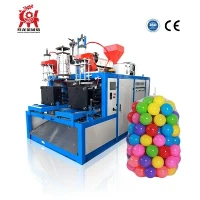
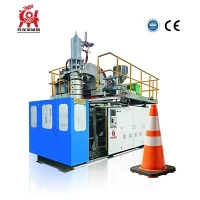
Let’s start with the biggest factor: the type of automotive part you’re making. Not all blow molded parts are created equal, and that dictates everything. For example, if you’re churning out large, structural parts like underbody shields or spare tire wells, you’ll need a mold that can maintain tight tolerances over big surface areas. If you’re doing smaller, high-volume parts like interior clips or sensor housings, cycle time and detail replication matter more. Here’s the thing—our Automotive Parts Blow Molding Machine is built for a range of these, but the mold has to match. Let’s use examples from other blow molding lines we work with, because it’s all comparative: we make Traffic Barriers Blow Molding Machine that uses tough, thick molds for heavy-duty, low-cycle-volume parts, and Hollow Large Barrel Blow Molding Machine that needs molds with great heat dissipation for consistent wall thickness. Automotive parts fall right in that mix of volume, size, and stress.
Next up, material compatibility. Wait, not the plastic you’re molding—wait, no, that’s part of it, but it’s more about how the mold interacts with the resin. Most automotive blow molded parts use HDPE (high-density polyethylene) these days, because it’s durable, lightweight, and cost-effective. But some specialty parts use PP (polypropylene) or even engineering resins like PA (polyamide) for extra strength. The mold material has to resist adhesion from these resins, right? If the plastic sticks to the mold, you get surface blemishes, stuck parts, and increased cycle times. For HDPE, a common go-to is P20 tool steel, which has a smooth surface that’s easy to polish and doesn’t let resin cling. But if you’re molding PA, which is more abrasive, you need something harder—like S7 tool steel, which has better wear resistance. I’ve seen clients skip this step and use regular steel for PA parts, and within a month, their mold’s surface is scratched up so bad every part has rough spots. Big headache.
Then there’s heat resistance and thermal conductivity. Blow molding works by heating the plastic parison, inflating it to hit the mold’s cavity, then cooling it. The mold has to cool the plastic fast enough to keep cycle times low, but not so fast that the part warps. Thermal conductivity is key here—how well the mold moves heat away from the plastic. Aluminum has super high thermal conductivity, way higher than steel. That sounds great, right? Faster cooling, shorter cycles. But wait—aluminum is softer. So if you’re making structural parts that take a lot of pressure during molding, or if you’re running high volumes (like 10,000+ parts a day), aluminum will wear out quick. It can get dented from parison pinch-off marks, or the cavity can erode over time. For lower-volume, more detailed parts (like chrome trim inserts for door handles), aluminum works fine—we’ve had clients use it for small runs on their Automotive Parts Blow Molding Machine and save a bundle. But for high-volume, heavy-duty structural parts, steel is the way to go. P20 steel balances hardness and thermal conductivity pretty well, and it’s more forgiving than super hard steels for maintenance.
Wear and tear is another huge one. Let’s be real—molds take a beating. The parison is pushed into the cavity with pressure, pinch-off blades slice through the hot plastic, and every cycle, the mold opens and closes. For parts that have thick walls or sharp edges, the mold’s pinch-off area is under extra stress. If your mold material is too soft, that pinch-off edge will chip, and suddenly your parts have uneven flash or wonky seams. We learned this when a client tried to use a cheap aluminum mold for a large fuel tank (and no, they didn’t use our machine—we saw their disaster when they called us to fix it). Their pinch-off edges were gone in 2 weeks, leading to 30% of parts being rejected. A proper steel mold, on the other hand, can last hundreds of thousands of cycles with minimal wear. If you’re running a high-volume operation, investing in a mold with good wear resistance will save you way more in the long run than picking a cheaper material that needs replacing every month.
Wait, what about surface finish? A lot of automotive parts have to look good too—interior trim, exterior mirrors, grille components. If the mold’s cavity is rough, the part will be rough. If you need a glossy finish, the mold has to be polished to a mirror-like smoothness. P20 steel can be polished really well, which is why it’s so popular for parts that need a nice look. If you need a textured finish (like a matte dash trim), you can etch the mold surface, and steel holds those textures way better than aluminum—they don’t fade or wear off after a few thousand cycles. I once worked with a client who was making interior door panels and used an aluminum mold with a matte texture. After 5,000 parts, the texture was gone, and their parts looked generic. Switched to a P20 mold, and they’ve been running 50,000+ parts a month for 2 years, and the texture is still perfect.
Cost factors, obviously—no one wants to blow their budget on a mold. But here’s the thing: it’s not just the upfront cost. You have to calculate total cost of ownership. A cheap aluminum mold might cost half what a steel mold costs, but if it needs replacement every 10,000 parts, and you’re making 100,000 parts a year, you’re spending 5x more on molds annually than you would with a steel mold that lasts 100,000 parts. For low-volume specialty parts (like custom trim for a limited-edition car), aluminum makes sense because you don’t need a super long lifespan. For high-volume mass production (like fuel tanks for a popular SUV), steel is non-negotiable. We also work with folks who make specialty automotive accessories—like toolboxes that fit in truck beds, which are blow molded too. Their Toolbox Blow Molding Machine uses steel molds because those boxes take a lot of abuse, and they need to hold up to thousands of uses. Same logic applies to automotive parts.
Another thing: maintenance. How easy is the mold material to repair? If you have a small scratch or a chip in the cavity, can you fix it without replacing the whole mold? Steel is way easier to weld and re-machine than aluminum. If you scratch an aluminum mold, you have to sand it out, and it never goes back to being as smooth as new. Scratch a steel mold, you can weld a little steel in, machine it flat, and it’s good as gold. That downtime for repairs adds up, so choosing a material that’s easy to fix is a big deal for keeping your line running.
Let’s also talk about niche automotive parts. What if you’re making something like a battery housing for an electric vehicle? Those are big, need to be lightweight, and have very strict structural requirements. For that, you might need a mold with excellent dimensional stability—so even after thousands of cycles, the cavity doesn’t shift. P20 steel has great stability, but some clients go for H13 tool steel, which has even better high-temperature strength, for parts that run at higher mold temperatures. EV parts are a growing space, and the last thing you want is a mold that warps when you’re running high-temperature engineering resins.
Wait, I should mention something I see clients mess up all the time: over-engineering. Just because steel is good for high volume doesn’t mean you need it for every single part. If you’re making a small, low-volume part like a side marker light housing, aluminum is totally fine. You don’t need to drop $10k on a steel mold when a $3k aluminum mold will do the job, and you’ll make 500 of them for a small batch of custom cars. It’s all about matching the material to your specific part’s needs, not what everyone else is using.


Let me wrap this up with a quick, actionable checklist, because I know you’re probably tired of reading by now. When picking a mold material for your Automotive Parts Blow Molding Machine:
- Know your part specs: size, volume, structural requirements, surface finish.
- Match to your resin: HDPE, PP, PA—each needs a different material to avoid adhesion and wear.
- Weigh thermal needs: fast cooling for small, high-volume parts = aluminum; durability for large, structural parts = steel.
- Factor in total cost, not just upfront: cheap materials cost more long-term if they wear out fast.
- Think about maintenance: can you repair scratches or chips easily?
If you’re still stuck, hit me up. I’ve helped tons of automotive blow molding operations get their mold materials right, and I’d be happy to chat through your specific part, machine, and production goals. No pressure, just real advice from someone who’s been in this game too long to sugarcoat it.
References:
- Rosato, D. V., & Rosato, M. G. (2000). Blow Molding Handbook (3rd ed.). Hanser Gardner Publications.
- Tool Steel Institute. (2018). Tool Steel Properties and Applications for Blow Molds.
- Society of Plastics Engineers (SPE). (2021). Automotive Blow Molding Materials and Process Optimization.
- Aluminum Association. (2019). Aluminum Alloys for Blow Molding Applications.
- Nakanishi, S. (2020). Thermal Conductivity of Mold Materials in Blow Molding. Journal of Polymer Engineering, 40(7), 562-570.